
✦Educator, 15+ years · M.S. Teaching & Learning✦ Peer-Reviewed Researcher, 2025✦Partners in Policymaking, Class 43✦
✦Lead Campaign Strategist, 2026 MN Statewide Primary✦ Bid and Paid Contract for an Accessibility Matrix for Partners in Policymaking✦
Peer Recovery Support Specialist Trained✦ DBT Skills Training ✦Youth Mental Health First Aid ✦ Trauma-Informed Coach✦

Education Leadership
Teach
A decade teaching, an M.S. in Teaching & Learning, and peer-reviewed policy research — instruction built plain-language and accessible from the first draft, not retrofitted.
Policy Advocacy
Organize
Mutual aid, disability advocacy through Partners in Policymaking, and voter-access work — grassroots, consent-first, and built with the people most affected.
Statewide Strategy
Strategize
Lead strategist for a 2026 Minnesota statewide primary — message systems, volunteer infrastructure, and an operating rhythm a small team can actually run.
Case Study 1: Disability Justice
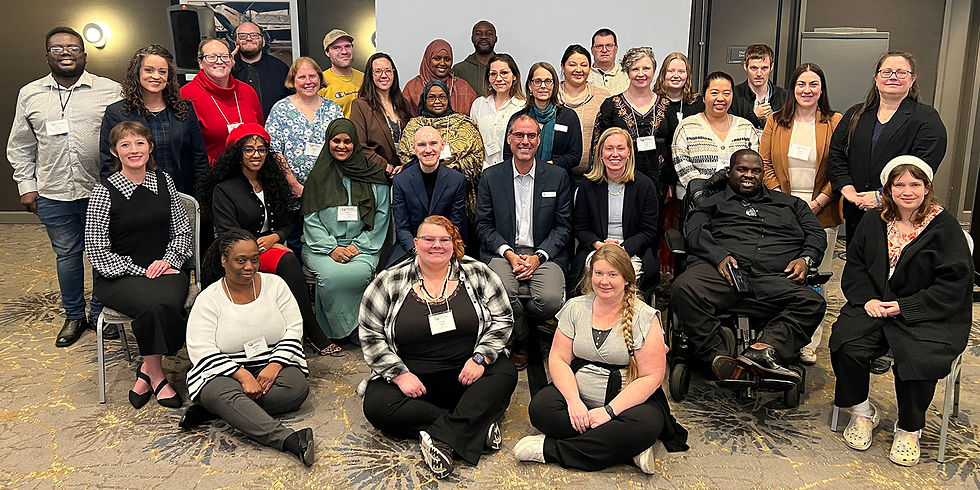
Partners in Policymaking®
Leadership training program for adults with disabilities and family members, created by the Minnesota Governor’s Council on Developmental Disabilities. Partners teaches leadership skills and how to build effective relationships with elected officials and policymakers who shape disability services.
-
Graduated from the Council’s competitive, yearlong disability-advocacy leadership program (128 hours across 8 weekends; the original 1987 model replicated nationally).
-
Program Director: Dr. Colleen Wieck.
Partners in Policymaking, Class 43 — MN Governor’s Council on Developmental Disabilities, 2025–2026
-
Engagement: Proposed, won, and delivered a State of Minnesota consulting contract to build accessible program infrastructure for Partners in Policymaking — the Council’s nationally replicated disability-advocacy leadership program — completed ahead of deadline, June 2026.
-
Instructional design: Delivered four interlocking, competency-referenced instruments — a program guide mapping all eight weekends (128 hours) of curriculum, a presenter proposal template with required accessibility planning, aligned post-survey and reflection instruments offered in five response routes, and a thank-you letter framework — engineered as one system, so a change made in one place carries through everywhere.
-
Accessibility standards: Grounded every deliverable in WCAG 2.1 AA, ADA Title II, and Universal Design for Learning — plain language with glossed acronyms, screen-reader-navigable structure, and named alternative formats — supported by presenter checklists and an 11-category barrier-and-accommodation matrix.
-
Analysis & reporting: Authored a framework-cited design justification and a two-phase accessibility barrier analysis; reviewed the program Coordinator’s Handbook and reorganized a video presentation series into accessible segments.
Partners in Policymaking Accessibility & Program Design Consultant (Contract) —
Minnesota Governor’s Council on Developmental Disabilities, Saint Paul, MN · May–June 2026

Authored under contract for the Minnesota Governor's Council on Developmental Disabilities' Partners in Policymaking program, this instrument turns a single premise — that what looks like an individual struggle is almost always a design problem — into a usable accessibility standard for a statewide disability-advocacy leadership program. It pairs four format-specific checklists (presentations, activities, discussions, and program infrastructure) that a presenter can apply before a session with a functional matrix that traces every item back to the barrier it removes and splits responsibility between what a presenter controls in the live room and what the program builds into its infrastructure. Each recommendation is anchored to five nested frameworks (ADA Title II/504, WCAG 2.1 AA, Universal Design/UDL, disability justice, and Minnesota's inquiry-based teaching standards) and sourced with citation discipline that distinguishes anchor-backed rows from original contributions. A closing intersectional layer stress-tests every item against the question who does this still fail?, and a companion crosswalk divides all five frameworks into presenter and program duties — demonstrating instructional design, disability-justice fluency, regulatory literacy, and the ability to translate principle into an operational tool a program can actually run.
Accessible Sessions: Checklists and Matrix

End the Subminimum Wage for Disabled Workers
This position statement argues that Minnesota should eliminate Section 14(c) of the Fair Labor Standards Act — the 1938 provision that lets certificate-holding employers pay disabled workers below minimum wage, sometimes pennies an hour — reframing it not as wage policy but as a lingering judgment about human worth left over from the institutional era. It grounds the case in Minnesota's own disability-rights legacy (Welsch v. Likins, 1974, and the Olmstead least-restrictive-setting principle) while confronting the state's contradiction: Minnesota pays subminimum wages to more residents per capita than any state in the nation. The two-page argument is backed by twelve sourced citations spanning federal law, GAO and Civil Rights Commission reports, case law, and state task-force findings.
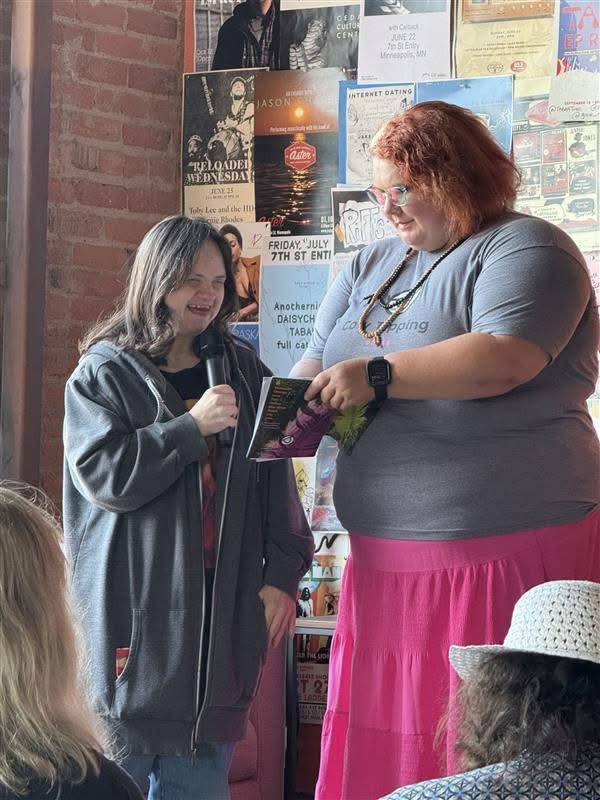
Cow Tipping Press is a Minneapolis-based nonprofit that teaches and publishes creative writing by people with intellectual and developmental disabilities (I/DD). Its guiding aim is to "change the narrative on disability" — presenting people with I/DD as authors and creative contributors rather than as subjects to be spoken for, and offering readers a fresh perspective on this form of human diversity.
What they do:
-
Publish books of writing authored by people with I/DD (radically self-representative work that centers disabled voices)
-
Teach creative writing classes for this community as an education program
-
Sell their collection through an online shop/bookstore (and Amazon
How to get involved: Take or support a class, buy books, subscribe or donate, partner with the organization, or explore employment opportunities.
Case Study 2: Disability Justice
Cow Tipping Press

Education Leadership
Teach
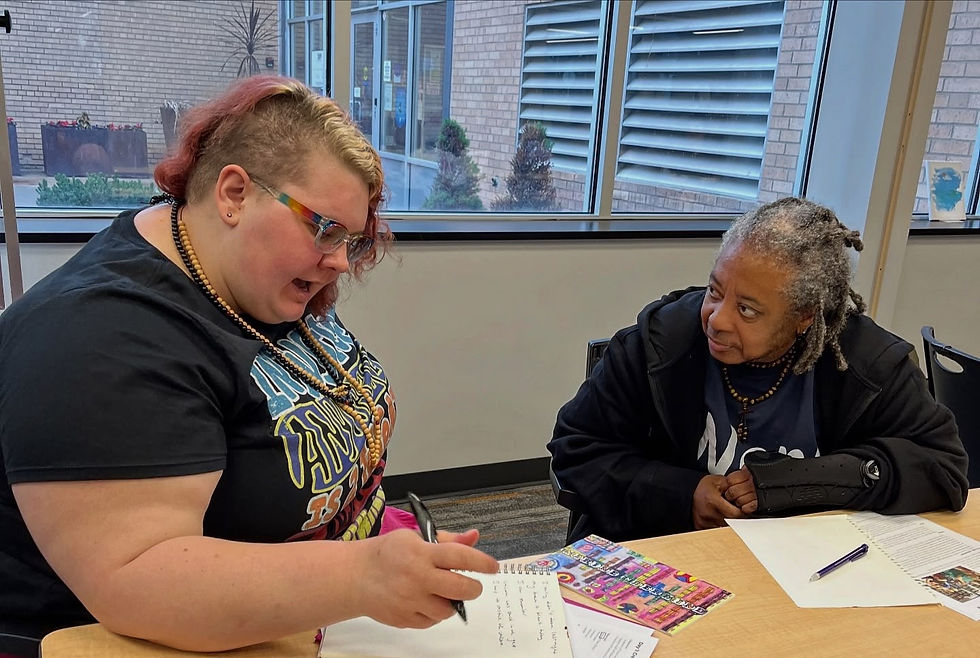
Accessible teaching designs instruction so the widest range of learners can perceive, understand, and take part from the start — treating most learning "struggles" as design problems, not student deficits.
In practice it means more than one way in and more than one way to show what you know: plain language, captions and described visuals, materials shared in advance, sessions chunked with real breaks, and participation that's invited rather than commanded.
Guided by Universal Design for Learning and legal floors like the ADA and WCAG, its deeper stance — nothing about us without us — is to presume competence and build the room around the learners it usually serves least, which makes teaching better for everyone.
Policy Advocacy
Organize
The READ Act arrives as a disability-support win: pushed partly by dyslexia advocates, it names special-education and multilingual learners and promises individualized reading goals.
In Saint Paul more than half of K–3 students were flagged, with African American English scored as errors. That screening feeds a placement pipeline that amplifies Minnesota's disproportionality (American Indian students 4× more likely to be labeled disabled, Black students 6× more likely placed in the most restrictive setting), so the disability label becomes a racialized channel of exclusion and lost instruction.
The core move is the social-model one: the deficit sits in the screening design, not the child's body or language. My usage of a "spirit repair," built from Love (2019) and Willians (1991), argues we need to fix the instruments instead of the kids and turn disability support back into individualized help rather than vendor-scripted surveillance.

Statewide Strategy
Stragetize
A working operations instrument I authored for a statewide gubernatorial campaign, defining Accessibility as a standing team lane with named authority over access across events, content, meetings, volunteer tasks, quiet space, rides, captions, and alt text.
It is built on one governing principle — access is infrastructure, not a favor — it gives the lane real stop authority: the power to flag, fix, or halt an inaccessible plan before it reaches people, so no content publishes without meeting a defined floor (captions, alt text, plain language, no strobe) and no event runs without a venue access check and a protected quiet space.
It demonstrates my ability to translate accessibility and disability-justice principles — access designed in from the start, disability treated as a design condition rather than an accommodation request, and access extended to the people doing the work, not only the audience — into an accountable operational role with clear authority, measurable success conditions, and a build-out path a small all-volunteer team can actually staff and grow into.